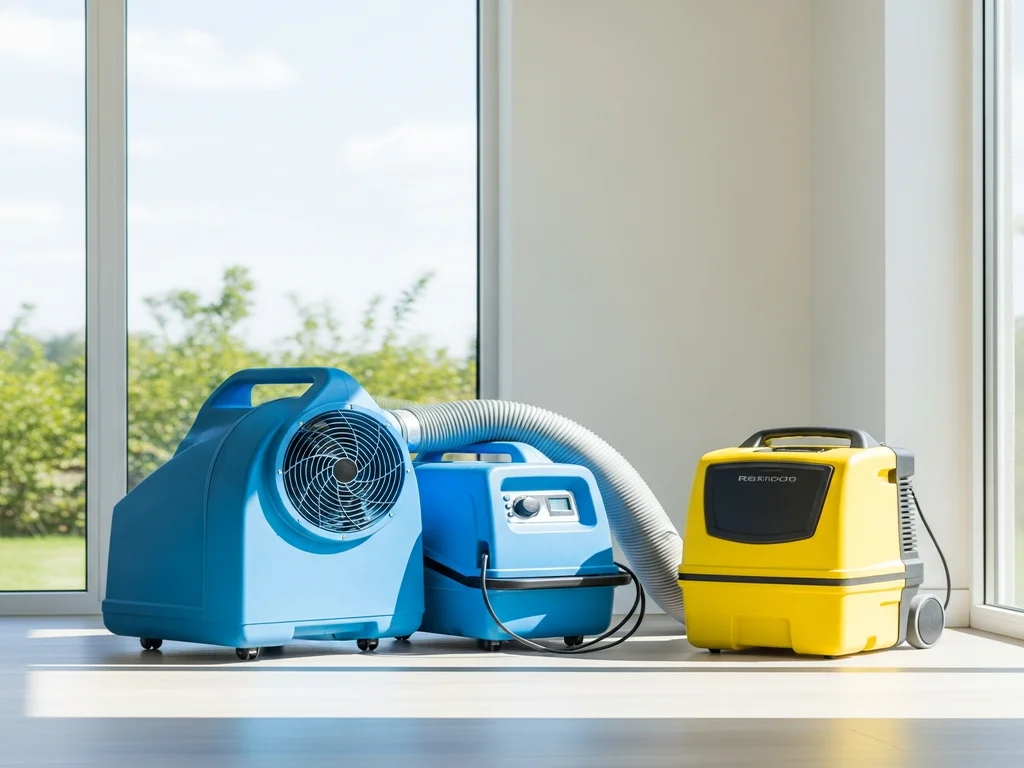
Walk into a home during water-damage restoration and you'll see rows of equipment running around the clock. It can look like overkill, but each piece has a specific job — and together they do something household fans simply can't. Here's how professional structural drying actually works.
Air Movers: Evaporation
Air movers (high-velocity fans) blow air across wet surfaces — floors, walls, framing — to speed evaporation, pushing moisture out of materials and into the air. Their number and placement is calculated for the size and layout of the space, not guessed.
Dehumidifiers: Removal
All that evaporated moisture has to go somewhere, or it just resettles into other materials. Commercial dehumidifiers pull the moisture out of the air and drain it away, keeping humidity low enough for drying to continue. Air movers and dehumidifiers only work as a team.
Monitoring and Specialty Drying
Technicians track moisture readings daily and adjust equipment until materials hit dry-standard targets. Hard-to-dry materials — hardwood, plaster, wall cavities — get specialty systems like floor-drying mats and cavity injection.
Why Household Fans Aren't Enough
A box fan moves air but doesn't remove moisture from it, and it can't reach hidden cavities. Without dehumidification and proper placement, materials stay wet long enough to warp and grow mold — which is why professional drying exists.
Dealing with this right now?
IronCrest Restoration responds 24/7 across Boise & the Treasure Valley.
Call (208) 779-5646